Royal Agro Food RDC
Royal Agro Food RDC
Chips Made in Congo
Une ligne de snacks ancree dans les cultures locales avec une presentation premium pour les marches regionaux.
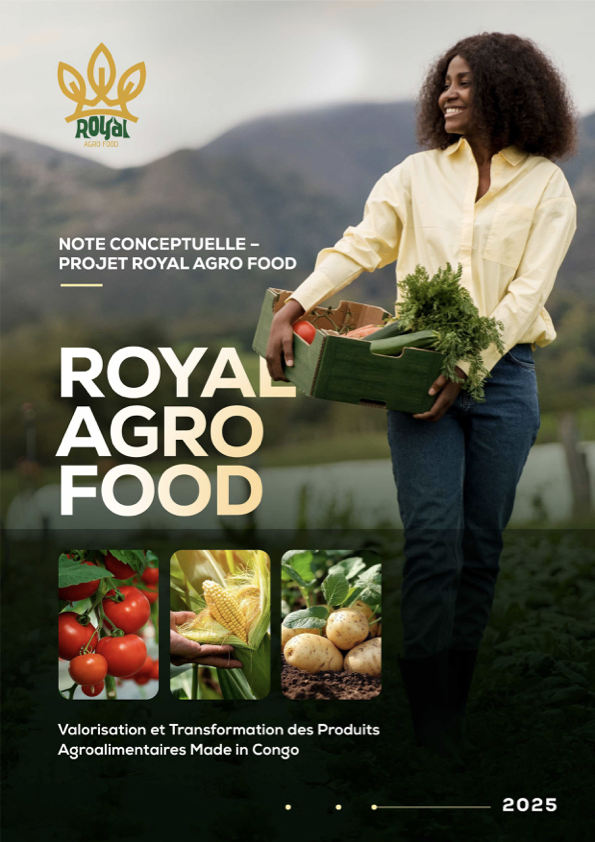
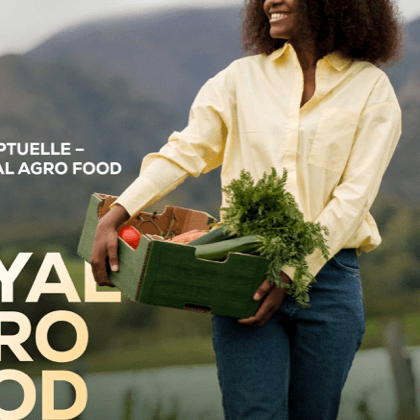
Royal Agro Food RDC valorise les produits agricoles locaux à travers une transformation de qualité, pour offrir des produits naturels, compétitifs et fièrement Made in Congo.
Lignes produits
7
Signaux de marche
3
Positionnement
1
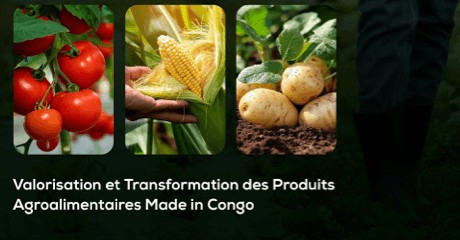
La RDC dispose d’une richesse agricole remarquable: pommes de terre, arachides, mais, manioc, piments, moringa, cafe, gingembre, miel et cacao.
Royal Agro Food RDC s’inscrit dans cette dynamique en transformant ces ressources en produits alimentaires plus finis, mieux presentes et prets pour des marches exigeants.
Chips, epices, miel, moringa, farine infantile ou beurre de cacahuete: Royal Agro Food RDC construit une gamme ancree dans les habitudes locales et tournee vers des marches plus larges.
Royal Agro Food RDC
Royal Agro Food RDC
Une ligne de snacks ancree dans les cultures locales avec une presentation premium pour les marches regionaux.
Royal Agro Food RDC
Royal Agro Food RDC
Des melanges nutritionnels pour des familles a la recherche d’une transformation alimentaire locale et fiable.
Royal Agro Food RDC
Royal Agro Food RDC
Des condiments a forte personnalite qui valorisent les profils gustatifs congolais.
Royal Agro Food RDC
Royal Agro Food RDC
Un produit naturel centre sur la tracabilite, la qualite et la creation de valeur locale.
Royal Agro Food RDC
Royal Agro Food RDC
Des produits d’assaisonnement penses pour la vente detail et une identite culinaire plus forte.
Royal Agro Food RDC
Royal Agro Food RDC
Des extensions fonctionnelles qui relient la demande bien-etre a l’agriculture locale.
Royal Agro Food RDC
Royal Agro Food RDC
Une ligne de transformation essentielle avec une forte pertinence domestique et commerciale.
L’urbanisation rapide, l’expansion de la classe moyenne et la demande de la diaspora renforcent l’interet pour des produits authentiques et bien transformes.
Snacks, condiments, epices et farines infantiles restent largement importes, laissant une place concrete a la transformation locale.
Pommes de terre, arachides, mais, manioc, piments, moringa, cafe, gingembre, miel et cacao ont besoin de plus de transformation aval.
De l’approvisionnement agricole au conditionnement final, chaque etape vise a ameliorer la qualite, reduire les pertes et preparer des produits prets pour le marche.
01
Construire l’approvisionnement autour de la richesse agricole congolaise plutot que sur les produits finis importes.
02
Reduire les pertes post-recolte par une capacite pratique et moderne de transformation alimentaire.
03
Ameliorer la preparation commerciale via le conditionnement, la presentation de marque et le controle qualite.
04
Construire des produits prets pour des opportunites nationales, regionales et internationales.
Royal Agro Food RDC depasse la simple vente de produits. La marque porte une ambition de valeur locale, de renforcement des capacites et de meilleure valorisation des ressources agricoles congolaises.
Davantage de transformation locale signifie davantage de valeur retenue dans l’economie congolaise.
Le concept privilegie des produits sains, naturels, competitifs et porteurs d’une identite nationale plus forte.
La marque presente le Congo comme producteur de biens agroalimentaires raffines et non seulement de matieres brutes.
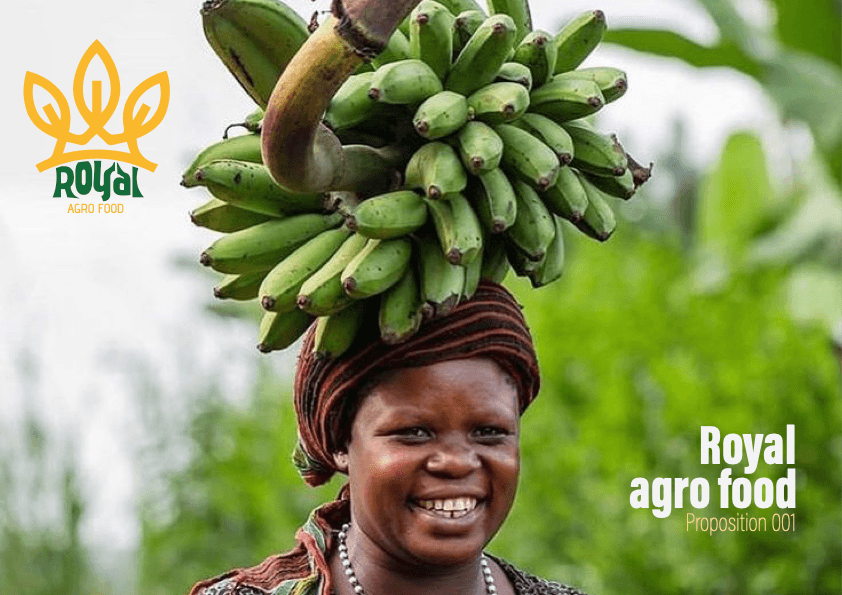
La note conceptuelle et les elements de marque traduisent l’ambition de Royal Agro Food RDC: valoriser les ressources agricoles locales, batir une offre credible et renforcer la presence des produits congolais sur le marche.
Ce que porte la marque